My Distractions, Addictions, and Priorities

Hi, my name is Jim and I am a video game junkie. (Hi Jim)

A little about me.  By night, I am James C. Struck, published spirituality author, aspiring novelist, loving husband and father of three, and blogger on all things that come into my fool head.  But by day I am King Geek of the Illinois River Valley, the ponytailed purveyor of mindless pixelated violence, endless side-quests, and all things that keep nerds pale, pasty, and indoors.

Translation: I’m a Store Manager for GameStop.
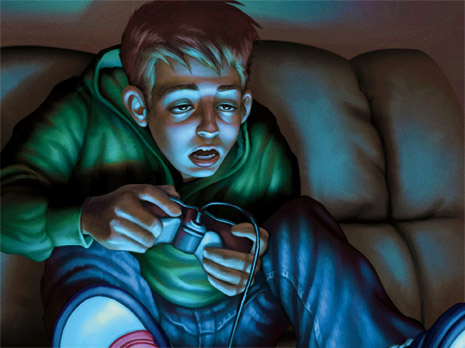
addicted-to-video-games

One of the lovely fringe benefits of retail management in the video game industry is I get a LOT of free stuff.  I mean obscene amounts.  Enough where my employees regularly threaten to beat me senseless for it.  While this is certainly nice from a monetary point of view, it does create one problem; I am, in the immortal words of Scarface, getting high on my own supply.  It’s one thing when you have to pick and choose which games to buy, because that allows you to prioritize, but when you (not joking here) get every single major video game release for free, you not only end up playing the games you were looking forward to, but also quite a few you otherwise would never have touched.

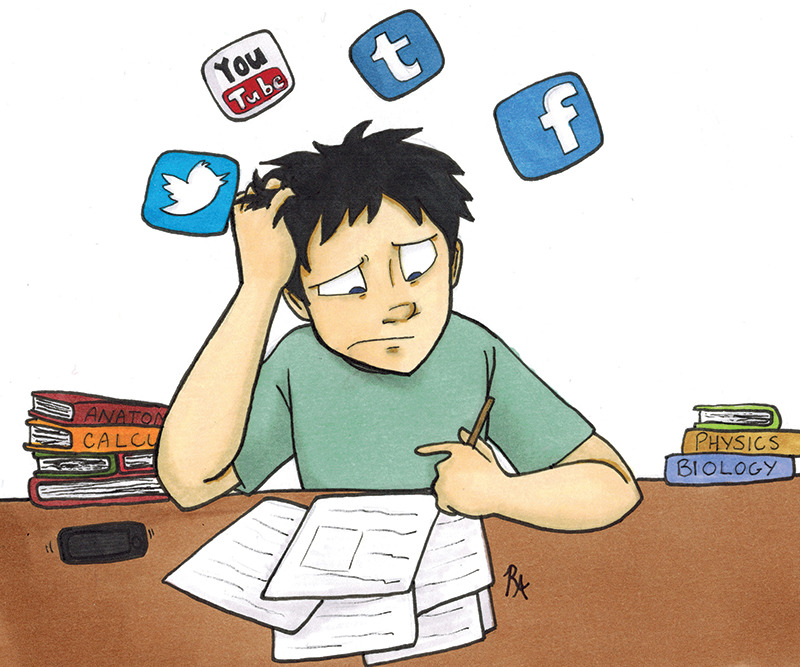
Now, were I like the average GS manager (young and single) this would not be as much of an issue, but I am, as I mentioned above, a family man.  Between work, kids, wife, and a house that always seems to need something done to it, I need an addiction to video games like I need a hole in the head.  But of course, it’s not just that. I am, finally after trying for nearly 7 years, a published author, and in this day and age being an author comes with certain expectations.  Simply writing isn’t enough, now authors need to have a blog, and a FB page, and a Twitter account, and a Goodreads page, and keep them all up on a regular basis, interconnecting them to create a “platform” through which potential fans can reach and interact with me.  And the writing thing, don’t forget that.  Kinda need to write if I want to be an author.

And yet here I am, logging onto Destiny on my PS4 at 11:45pm so I can check if I have enough Strange Coins yet to buy that exotic sniper rifle from Xur.  No wonder I’ve only written 11 pages in my WIP since late August.
Action-expresses-priorities

All joking aside, everyone needs their mindless entertainments.  Everyone needs to decompress.  Writing, while I love it, requires a certain amount of gas in the tank to get going, and the only way to fill up that tank is to unplug every once in a while.  But we live in a world where the line between entertainments and addictions is very, very blurry (perhaps deliberately so, but that’s another blog post), and crossing the line is a little too easy.  I try to claim that my creative output falls off the table in autumn because of the workload at my job spiking and because I suffer from mild SAD, but I know that’s only most of it.  There is that siren’s call of all those lovely new games, those new stories and experiences and achievements tugging at me, pulling me away from my priorities.  And sometimes they succeed.

I’m sure I’m not alone in this.  So if you’d like, tell me about your distractions, your addictions.  What in your life pulls you away from your priorities a little more than is good for you?  We all have them.  Share.  Knowing that others know the struggle will help all of us.  I’d love to hear about yours.

Peace, Light, Love, everyone.
The Self-Destructive Artist

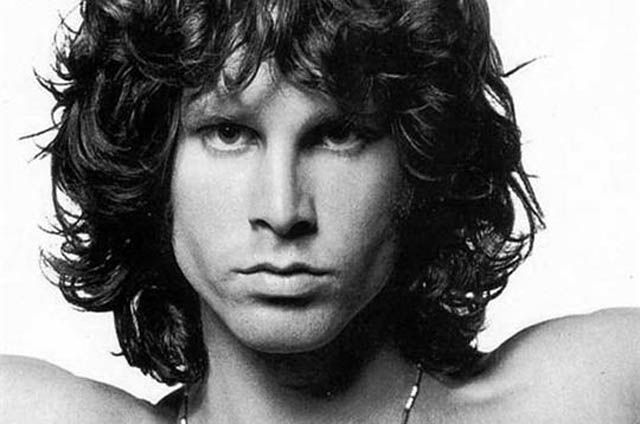
morrison
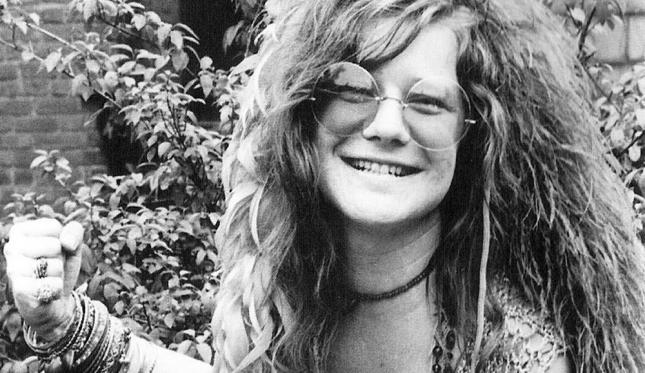
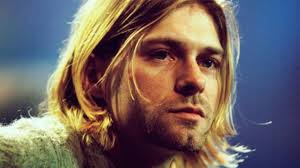
A few years before he died, I had a very interesting conversation with my late brother. He’d gotten me in our annual Christmas grab-bag and bought me a live recording of Pink Floyd’s “The Wall”, and we were sitting around afterwards jawing about music and musicians and how tragic it was that so many incredibly gifted individuals died so young: Jim Morrison, Janice Joplin, Jimi Hendrix, Keith Moon, and so on. I asked him why he thought it happened, that so many artistics tend to self-destruct, and he said he thought it was because creatives tend to have “a little more of God in them”, which makes them more sensitive to the evils of the world. I thought this was bunk, but the idea caught in a crack in my brain and has stayed there for years. Why is it that those we admire so greatly, who bring such joy to our lives, are often so miserable themselves?
I think the answer to this question lies in the nature and purpose of the arts. Any artistic endeavor, whether it be music or painting or dance or acting or whatever, is created or performed for the purpose of evoking emotion. In order to be art, I think it needs to make you feel something when you experience it. It doesn’t necessarily need to be a positive emotion: look at Stravinsky’s “The Right of Spring” or Munch’s “The Scream”, for example. But in any example, art brings forth emotion, and the more powerful that evoking, the better the art. That, I think, is why so many of the traditional art forms fractured after World War I. Many of the arts became more cerebral and less emotional, and people didn’t respond to it.

OLYMPUS DIGITAL CAMERA

So what does this have to do with musicians overdosing on heroine? In order for an artistic to create, they need to be able to grasp the emotion they intend to bring forth in their work. There has to be an intended response, a goal of joy or fear or sadness or rage or whatever that the wish their audience to experience, and so the creative needs to be able to feel the same emotion themselves to some extent. This is where things get dangerous, because too many creatives believe that they need to experience the emotion in order to truly represent it. They open themselves up to all sorts of emotional highs and lows, believing that doing so is necessary for their creativity to function. Thus the stereotypical artist: moody, angry, wild, and self-destructive.
Even if they survive this emotional rollercoaster, another trap lies ahead of them. While this society had done an adequate job of opening up avenues for creatives to learn the tools of their chosen trade (though how adequate is open to debate), what is completely neglected in this “education” is their emotional learning. This society places a great deal of stock in teaching young people intelligence, but almost nothing in teaching wisdom. Intelligence is understanding of other, while wisdom is understanding of self. This is bad enough for the average person, but for artistics such lack of self-learning is deadly. They have never learned how to deal with the very emotions they call forth from their creations, and as a result are far too often eaten alive by them.
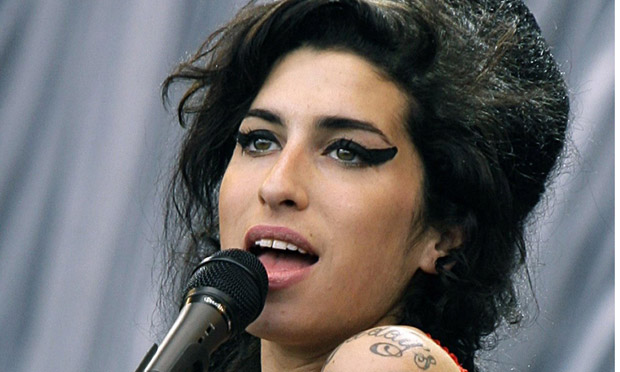
Amy Winehouse
Is it any wonder that so many creatives turn to substance abuse to numb themselves? Too often, they are already addicts of a sort, hooked on their own creativity and the emotional highs it brings them, and the step from addiction to creation to addiction to a bottle or a pill or a powder is very, very small. To top it all off, we have the Cult of Celebrity our society has produced, which both glorifies and crucifies those “lucky” enough to have “made it” in the world as creatives. They are showered with riches, inundated with fame, and told that this is all they should need to be happy, that this is the Point Of It All. Then when they are not happy, they assume that there is something wrong with them, and the spiral continues.
So what to do? How can this situation be stopped, for the health of those we admire so greatly and the good of our society as a whole? Perhaps the place to start is in the education of our young, teaching them wisdom as well as intelligence. Maybe the place is in our popular culture, promoting healthier ideas about entertainment. Or the place to start is to teach our creatives an psychically healthier way to tap into their emotions. Perhaps there is yet another place I don’t personally see yet, I don’t know. But something needs to be done.
For all of our sakes.
Janis-Joplin

A Sense of Accomplishment

I start way more things than I finish.

I think that’s pretty common for writers.  We get the idea, the great and glowing thing in our heads, and we dash off to our computer (or in my case, my notebook) and get to work, scribbling or tapping away.  Sometimes the idea just dries up and we stop.  Sometimes we keep going for a while and then we get another idea and drop the first one.  Sometimes we keep at it but our doubts and insecurities and lives and busyness and procrastination and what have you just get in the way.

But sometimes, just sometimes, none of this happens.

I’ve just today finished the longest thing I’ve ever written.  It took me 13 months (yeah, no NaNoWriMo for Jimmy) to write 157 pages of longhand YA modern fantasy novel.  It’s the first time I’ve ever finished anything close to this length that was fiction; most of my longer stuff is philosophical ramblings.  The previous story record was about 50 pages and that was in 2003.  And the best part is that I’m not done.  The story, assuming I finish it, is a trilogy.

So why am I bothering to document this in Cyberspace, and why do I think anyone else will give a crap about it?

We live in a society where accomplishment is measured in material things.  Success is weighed in square footage of house, names on clothing tags, shininess of car.  We rarely allow ourselves, or perhaps we are rarely allowed, to feel accomplishment for its own sake, to just feel good about “hey, I did that”.  It has to be “okay, you did that, now what will you do with it?”  Everything has to be a product.

Yet real accomplishment has nothing to do with that.  Our sense of worth and worthiness is garnered from being something, not having something.  Think of the times you really felt good about yourself.  Did it have anything to do with some material acquisition, or did it come from within?  Neale Donald Walsch once wrote that part of the reason our society is so unhappy is because we have what he calls the “be/do/have paradigm” upside down.  We think that, in order to be something, happy for instance, we have to have something first, like more money.  This having will allow us to do things (take a trip, buy a house, pay a bill) which will then allow us to be what we want (happy).  He says that we have this backwards.  We instead should decide what we want to be, then do things that move us towards that.  This will then create things to have that work with the doing and being.

Today I have finished my book.  I did this because I chose to be a writer and to stick to it, no matter what.  This led me to do something, which was to make time to write every day, even if it was just a few minutes to write a few words.  This made it possible for me to have a finished book, and a great sense of accomplishment because of it.

Mr. Walsch might be onto something. 🙂

What It’s Like To Be A Writer

20150707-202009.jpg

Being a writer is unlike any other creative profession, and I know this because I’ve tried quite a few. I’ve been a performing musician since I was a kid, and trust me, writing is completely different than music or theatre or just about anything else I’ve ever tried. Why? Because writers are completely nuts. Let me give you a few examples.

We have people living in our heads, and they can be little assholes.

Writing can be a very inconvenient creative outlet, mostly because the characters that we dream up (or perhaps find, but that’s a different blog post) really are little people in our heads. And just like real people, fictional people can be demanding. They want attention, have cranky days, act impulsively and thoughtlessly, and sometimes want to be heard at times that are inconvenient to say the least. Like while you’re driving 70 mph down the interstate. Or at 2:30 AM.

Worse yet, they have times when they don’t want to talk to us. Maybe they’re sulking, maybe they’re tired, maybe they’re just feeling stubborn, but no matter the reason sometimes our fictional friends just clam up. Of course, we writers aren’t really allowed to deal with this the way we really should. If a friend or a loved one decides they don’t want to talk to you, it’s perfectly acceptable to get upset or hurt, but if a fictional character does? Suck it up. Doesn’t matter how much you miss them, doesn’t matter how much it hurts, because as far as the rest of the world is concerned, fictional people aren’t real.

We writers know better. Yes, I know how crazy that sounds.

We have strange obsessions with things having to do with writing and the written word.

I am an old school writer, pen and paper. Mostly this is because it keeps me from editing the idea to death, but the downside of this I am obsessed with notebooks and pens. In any room of my house there are at least 3-4 notebooks hidden somewhere: shoved onto bookshelves, mixed in with my sheet music, on the end table, under the couch, on the dresser. And yes, this does not endear me to my loving wife.

Of course, she also bought me a leather bound journal for Father’s Day. Thank you, my Love. 🙂

Then there’s my pens. Unlike notebooks, where I am a gourmand, with pens I am a gourmet. I buy and use one kind of pen and one kind only: Pentel RSVP Black Fine Tip. I believe I have at least 42 of them scattered around my house and my work, as well as at least one package of multicolored RSVPs for edits.

And yet every time I go to Target or Walmart or (oh god help me) Staples, I am drawn to the stationary aisle as though there’s a black hole there that only affects me. They’re a drug, I’m addicted.

And don’t get me started on our book collections

One day, the foundation of my house is going to throw up its figurative arms, say “gg”, and collapse under the sheer weight of the books inside it. This is SO much worse than the notebook thing, partly because I’ve been reading since I was 4 but writing only since I was 15, but mostly because my whole family are addicts of the written word. There isn’t a horizontal surface in my house that does not house at least one book. The closing of a local book store was a cause for tears, no joke. No book aisle can be simply walked past by my family.

Every author I know is like this. Our bookshelves are packed two rows deep and then more books are stacked in front of them, usually divided into “read”, “unread”, and “get to it one day”. And god help us if we discover a new author we love, especially a prolific one. Or a series that is out of print, that’s even worse.

Discount bins? $1 racks at local resale shops? Library book sales? They’re like rolling a wheelbarrow of crack out in front of a junkie. I could not tell you how many books I’ve purchased because “it’s only $1, it’s only $.50”. Shit I will never read. I bought a copy on the Quran in Arabic and a Latin Vulgate Bible. Why? They were pretty and I wanted to see if they would spontaneously combust if I put them next to each other on the shelf. It’s pathetic.

Mood = Creative Output

There is nothing, nothing more sad and pathetic than a stuck writer. I know, I’ve been there. It’s like being emotionally constipated. We are surly, moody, sulky, and generally unpleasant to be around.

If anything, being on a roll is worse.

Not for the writer, mind you. For us, being on a roll is like being in love: Cloud Nine. But just like being in love, the only person who can stand being around us is the object of our affection. To everyone else, we are vague, selfish, absorbed, and obsessed. I knocked out my first draft of The Curious Snowflake in less than two weeks, and my wife told me later I was impossible to live with, utterly somewhere else. The only time writers are worth being around are on good editing days, and even that’s a stretch.

Everybody else is character fodder.

My MMC in my WIP (male main character in my work-in-progress, get with the nomenclature) is part me, part my son, and is based physically on one of my employees. His mentor is a short version of an old college buddy. The villain is my old voice coach (actually a great guy).

This is how it works. Authors want to make characters who are actually people, so they end up being a pastiche of the people we actually know. Famous, best selling authors do this all the time. Don’t believe me? Read the section at the beginning of Stephen King’s On Writing where he talks about meeting his wife and then go back and read, say, ‘Salem’s Lot or The Stand. Yeah, there’s a little Tabby King in almost every FMC ol’ Steve’s ever written.

So don’t piss off your writer friends, or you might find yourself immortalized in their prose.

So yeah, we’re basically nucking futz

Obsessive. Selfish. Oblivious. Moody. Judgmental. Perhaps even a little schizo-affective. So why does the rest of the world put up with us writers? Because we are also are loving, inspiring, thoughtful, and (at the best times) a little bit amazing. Most important, we write these stories and ideas that touch other people in positive and even wonderful ways. For that, I think, the rest of the “normal” people should cut us nutty authors a little slack.