A Critique of the Modern Dystopia Fad
I love a good dystopia.
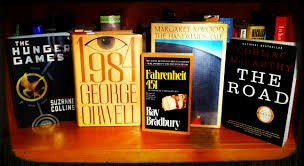
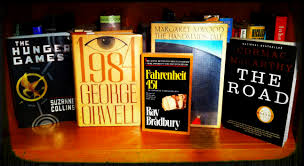
I don’t know why, really. I am a very optimistic person (a little too optimistic if you ask my wife) and I truly believe that, while we as a species have made some rather dopey choices over the last 150 years or so, we can still right the ship and create a better world than the one we currently occupy. But this doesn’t change the fact that my book collection holds a plethora of well-worn dystopian novels. I have read the classics numerous times: 1984, Brave New World, Fahrenheit 451, The Handmaid’s Tale, and so on, and I find them fascinating. I think it is connected with my love of understanding people and what makes them tick; what is the difference, really, between a foul-tempered, controlling person and the nation of Oceania? The latter is simply the former writ large.
In case you’ve been living under a literary rock (and if you’re reading this blog I highly doubt that) dystopias are a hot commodity right now, and I’ve loved them. Hunger Games? Excellent, though I actually like Ms. Collins’ Gregor the Overlander series a little better. Insurgent? Also good, though I’ve only read the first book. Ready Player One? Just knocked it out in about 36 hours, talked it up to everyone.
But they’re not really dystopian.
Now, they are dystopian settings, to be sure. President Snow’s cruelty would make Big Brother nod in approval, and Huxley’s Soma has nothing on the OASIS, but in these modern dystopias, the characters are placed front and center, not the world. They have moments of triumph, moments of peace, moments of love, and these drive the narrative. More importantly, there is a ray of hope in the modern dystopias. It may be a dim ray, but it is there. In the great dystopian classics, the hope only exists to us, not to the characters. We know that Offred’s world changes, we know that books still exist in Montag’s mind even after being burnt, but these salvations are not meant for the characters we’ve come to know.
This dissonance between the hopelessness of the world and the hopefulness of the characters grates on me slightly. In my heart, I don’t want the characters to win. I don’t want happily ever after, or any after, really. What I want from a dystopian novel is a note of caution. I want them to be a warning to us, that these imaginings are far more proximate to our reality than we want to realize. Just a nudge, a bump of the hip, and we could be there, slogging in the coal mines of District 12 and praying not to become tributes, or jacked into our haptic rig for 18 hours a day, every hair shaved for maximum contact. Dystopian novels are supposed to be cautionary tales, and these modern stories, for all their undeniable quality, lack that.
 James C. Struck: Author of The Curious Snowflake