Springtime At Last

lilacs

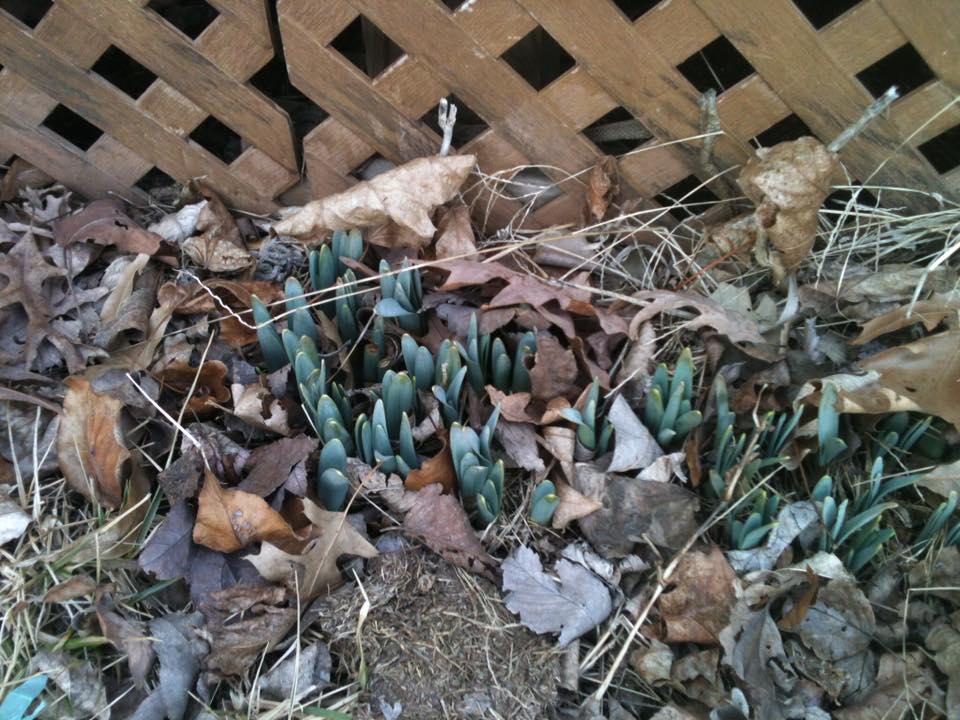
The green creeps upward in Spring.

tulips

First grass transforms from thatch to verdant

seemingly overnight,

then the first plants, peeking out from under last autumn’s leaves.

green

Soon after, the shrubs join in,

spreading a faint haze of life through the undergrowth

hiding the skeletal branches in a wrap of green.

treebuds

Then, at last, the explosion of life,

flowers bursting from ground and branch,

leaves finally leaping to the treetops,

banishing winter’s final remnant of bareness,

and softening the wind’s voice

from whistle to susurrus.

redbuds

Life wins again

lilacs

When Geek Wasn’t Chic

Geekout

It’s a good time to be a geek.

Everywhere you look, geek culture is booming.  The movies based off Marvel Comics franchises have pulled down over $19 billion, video games sales hit $91.5 billion in 2015 alone, and sci-fi and fantasy have been the top-selling book categories for years.  For the generation that has grown up with Harry Potter, XBox 360, and smartphones, these things are and, to their eyes, have always been cool, or at least acceptable.

Let me assure you this has not always been the case.

I am 41 years old, the perfect age to ride the cusp of technology from childhood on.  I remember playing endless games of Oregon Trail on monochrome-green Apple IIe screens in the computer lab in grade school.  I got to experience how Ronald Reagan’s changes to the Federal Trade Commission turned Saturday morning cartoons into 30-minute geeky advertisements for toys.  I played Pong, Asteroids, Breakout, Pac-Man, all of them as they released.  I had a front row seat (and have the packed-away issues to prove it) to the great shift in comics storytelling.  In many ways, the 1980s were the Golden Age of geekdoms, where much of what is beloved today had its roots, and that was my childhood: Atari, Star Wars, Iron Man, Tolkien, and Transformers.

But it was not much fun to be a geek back then.

I may have been part of the first electronics generation, but these entertainments were seen as fads, fringe, or just plain weird by most people.  My parents, part of the Silent Generation,  refused to get cable TV, a microwave, or any video game system past a 1970’s solid-state Pong rig.  My friends couldn’t understand why I would rather read than play outside.  My schoolmates thought Transformers were cool but didn’t understand my obsession with the Macross Saga and Battle of the Planets.  I found a small clique of similar outcasts and we spent our weekends playing 2nd Edition Dungeons & Dragons and watching Monty Python marathons, but our entertainment obsessions meant we were on the outside of the popular world looking in.  We claimed we didn’t care, but we all did.

The shift, I feel, began in the mid-90s.  By that time I was in college and in my short-lived goth stage (never dyed my hair black, though), but I was still a geek at heart.  The Internet was just becoming a thing, and with it the realization that it created a space where like-minded people could find each other.  BBSs and AOL chatrooms became meeting halls for the socially awkward, where interactions were kept quite literally under glass and even the shyest among us could find a voice, even if it was just in text.  In the roleplaying game scene, this was the era when live-action roleplaying, or LARPing, exploded, where people would go beyond paper and dice and actually become their characters for a day or evening or weekend.  Suddenly we geeks had a social crowd of sorts, though the tabletop purists despised it.  Looking back, it is amazing how big it got.  I attended a weekly gathering for White Wolf’s vampire LARP that consistently drew 150-200 people, and once had over 350 show up.

As the internet matured, LARPing fell by the wayside, replaced by a black hole of geekiness that even I have never ventured down: massively multiplayer online games, or MMOs.  Starting in 1997 with Ultima Online (though others existed before that), suddenly geeks had an entire visual world to meet up at and hide in.  Stories abounded in the early 2000s of people getting addicted to MMOs, to the point of losing jobs, relationships, and in a few cases, even suicide.  This level of obsession has even been lampooned in The Guild, the Web TV show that launched the career of Felicia Day.

But if there is one event, one turning point where geek culture and mainstream culture truly began to merge, it can be described in one name: Harry Potter.  Suddenly, a new generation of geeks had a rallying obsession, a new generation of parents who grew up in a much more geek-friendly era had a tool for getting their kids to read, and we who had grown up on Tolkien, Brooks, and Lewis finally had a common ground with the rest of the world.  This explosion of interest in fantasy got Hollywood got involved, and soon after, Peter Jackson’s adaptation of Lord of the Rings went on to win 17 Oscars.  With this, geek culture finally went mainstream.

Perhaps I am a little bitter that today’s geeks don’t have the uphill climb I and my generation had, but not much.  A whole new slew of problems have crept into geek culture that I never had to deal with, from the addiction problems I mentioned above to sexual harassment in the video game industry to the fake geek girl idiocy.  But when all is said and done, I’m just ecstatic that all these things I’ve loved all my life are no longer denigrated as shameful or stupid.

Geek for life, man.  Geek for life.

Above all, Charity

Colossians 3-14Generosity.  Giving.  Charity.  If there is one thread that binds all of the world’s religions together, it’s that generous acts should be encouraged.  Charity, generosity, and giving to the poor are mentioned in the New Testament over 30 times, Zakat, or donating a percentage of your income to the poor, is the third of Islam’s Five Pillars, daana, or charity without expectation of a return, is a key aspect of Hindu teachings, and Buddhism celebrates even the simplest acts of kindness. Even the IRS encourages them by giving tax breaks for charitable contributions.  But why is it so universal, and what does this imply?  What does this say about humanity?
Every one of us have given a small bit of our abundance to those in need at one point or another.  We’ve dropped a handful of change into a Salvation Army red bucket.  We’ve slipped a dollar into the guitar case of a street musician or the cup of homeless veteran. One January when I was in college I saw a guy playing the tuba at 9 o’clock at night on a Chicago street corner.  I handed him $5 (a big deal for a broke college student in the 90’s) and told him to get inside before his lips froze permanently to the mouthpiece.  And this made me feel good.  Really good, actually, and I’m sure that you’ve felt the same way if you’ve had a chance to do something similar.  This is beyond simple conscience or empathy, beyond the norms of our society or the teachings of our religions.  Something about being kind just feels . . .  right, like an affirmation.  Reaching out and helping another person feels genuine, like doing so is an acknowledgment of something.  I’ve given this a great deal of thought, and I have a theory about why, but first I need to explain a little about my beliefs.

If I had to put a label on my belief system, the one that would come the closest is Pantheist.  Pantheism is the belief that all of existence is an interconnected whole, and that this whole is, for lack of a better term, God.  Not the God of Christianity, Judaism or Islam, for those religions teach that the Divine is separate from Creation. Instead pantheism teaches that the Divine is existence, in a very real and literal sense.  To a true pantheist, all of existence is holy, and the only sins come from fighting against the truth of our interconnection. Now, my beliefs deviate from this in quite a few ways, but that’s not important here.  The key fact is that I agree that “God” is not separate from us, and we are not separate from each other.  More importantly, I feel that the joy that we get from being generous is proof of this interconnection.

Take this experience we’ve been discussing, this joy of generosity, and apply it to other spiritual points of view.  To a monotheist, generosity is an edict from on-high, a requirement from God to behave in certain ways in order to earn a reward.  To a reincarnationist, kindness is merely karmic book-balancing, an attempt to work off negativity from previous lives. To an atheist, charity is an acknowledgment of empathy and a way to  keep the unfortunate and unlucky from destabilizing society.  Yet none of these explain or even acknowledge the joy of generosity.  They see it as nothing more than happy aftereffect or a result of Divine-given conscience.

I look at it differently.  Stop and consider for a moment  how it feels to receive generosity rather than to give it.  Once we get past any feelings of guilt or shame (which I believe is just an unfortunate result of living in a capitalist society), receiving succor also feels good.  It feels like an acknowledgment that we are worthy, that we deserve kindness. Think about this.  Being generous and receiving help both trigger positive feelings.  If we are individual souls trying to earn salvation, reincarnated souls seeking balance, or just bodies and minds going through the motions of our brief existences, why would receiving help feel as good giving help?  It doesn’t make sense.

Ahh, but what if we are interconnected?  Then a logic beings to take shape behind all these feelings.  Now, when someone is generous to another, it makes perfect sense that both would receive a similar positive emotion, for at a deep and esoteric level, there is no “other”.  There is just one Soul experiencing things from different perspectives at the same time.  Now, I know this is an odd, even alien concept for many people.  We are all taught the myth of the Rugged Individualist, we are all exposed to the rather lonely philosophies of most major religions, and what I am trying to describe runs counter to these in many different ways.  I am not here to convert anyone to any particular way of thinking, but I do want you and everyone else to think about this, and think deeply.

So the next time you feel the desire to give, stop for a moment.  Look into the eyes of that street musician, that homeless person,  that bell ringer.  See them as another person with hopes and dreams, joys and disappointments, foibles and graces.  And just for a moment, try to perceive in their returned gaze a flicker of that Divine Spark that lives in all of us, that crosses creeds, classes, and colors.  Look for that moment of namaste, the God in me acknowledges the God in you.  This is what generosity is truly about.  It is a chance for us to express our interconnection in a real and tangible way.  Few things in life feel more fulfilling, because few things in life better reflect what I believe to be the real nature of existence.  I give to you because you and I are connected, and if you lack something, then at some level so do I.  I receive from you with gladness, for I know that I deserve kindness and that you feel as much joy from this act as I do.  In this way, charity may be the most holy act we humans can do.

Why I Love Baseball

Casey at the Bat

It is April, and I love baseball.

For the most part, I can take or leave spectator sports.  Football does nothing for me.  I got burnt out on basketball being a bartender in Chicago in the late 90’s.  I can appreciate hockey but it doesn’t grab me.  Soccer players are incredible athletes but watching it is like watching paint dry.  Golf…. don’t get me started.  But baseball?  I’m a freak for it.  Not for the players and the dramas, and not for the endless stat-crunching, but purely for the game itself.

I am the only person I know whose favorite type of baseball game is the pitchers duel.  Most people love the slugfest, the 14-11, four-homers-by-each-team kind of deal.  Not me.  Give me a nailbiter, a 0-0 game in the top of the 8th where a single mistake means the entire game.  To me, everything interesting in baseball happens before the pitch is even thrown.  It’s the mental game, the guessing and predicting, the contest of wills between hitter and batter.  I love seeing an ace in top form, where every pitch hits the corners, where every swing is half-hearted or desperate.

But I am worse than a baseball fan.  I am a Cub fan.

Not a Johnny-come-lately, Kris-Bryant-is-so-dreamy Cub fan.  I remember watching Dave “King Kong” Kingman crush balls in the late ’70s.  I remember Leon Durham booting a grounder in the NLDS in 1984.  I remember Will Clark outdueling Mark Grace in 1989.  I remember the pyrotechnics of 1998s home run race.  More importantly, I remember 19 other seasons of pure misery between 1978 and 2000 where the Cubbies didn’t even make it to .500.  After that, the 2000s seemed like a cornucopia, despite the heartbreak of the Bartman Incident (at which point I turned off my TV and walked away, already sure of how it would go.  I was right).  So yes, I am not THAT kind of Cub fan.  Trust me, I dislike them as much as anyone.

But if there is one thing I love best about baseball, it is that it has for the most part avoided the arrogant showmanship that has marred most sports over the last 20 years.  The few times that a player truly showboats, such as Jose Bautista’s Game 5 ALDS home run last year, there is genuine displeasure from both fans and commentators.  There is something about the game that engenders an odd reverence from everyone that no other sport holds, especially when it comes to the past.  Every fan knows those magical milestones that only the greats achieve: 500 hr, 300 wins, 3000 hits, 3000 Ks.  Every fan knows about the Black Sox, the Curse of the Bambino, the Billy Goat.  There is a depth to baseball’s past that no other sport possesses, and it gives the game a seriousness that is also unique.  A seriousness I appreciate.

I could bore you with more, tell you about my vain hope for my favorite team this year, but I’m quite sure there are 300 other blogs out there saying the same.  Instead I will just leave you with this, my little love letter to the one sport I truly love.  Whether there is Joy in Mudville this year or not, that won’t change the fact that I still slow down when I pass Little League games to try to catch the score.  It is, as my wife likes to say, my one concession to my testosterone.

I love baseball, and it is April.  Time to watch the game.