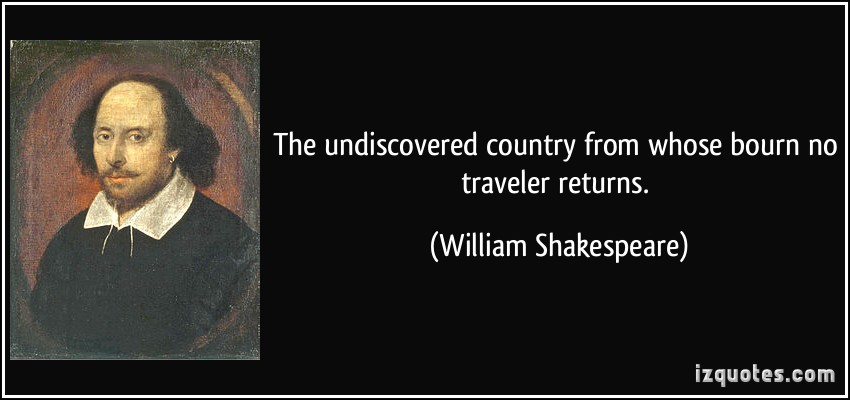
The Undiscovered Country
But that the dread of something after death,
The undiscovered country from whose bourn
No traveler returns, puzzles the will
And makes us rather bear those ills we have
Than fly to others that we know not of?
One of the more famous lines from probably the most famous soliloquy in the English language. While the Melancholy Dane was contemplating suicide out of despair, the lines Shakespeare wrote speak to a much broader truth; we, as a society, are scared to death of Death.
So why is that true? Why do we who live in the most Christian of nations fear the dispositions of our souls so deeply? Well, to be honest, I think that is precisely the problem. For better or for worse, Christianity is a religion based upon uncertainty. Theirs is a very particular God, one who wishes to be believed in and worshiped in very specific ways. What those ways are is open to a massive amount of debate, as evidenced by the fact that there are at least 35 denominations with over 25K members in the US alone. If these Godly demands and preferences are met, all is right with the world, but if not the consequences are severe to the extreme. With this Sword of Damocles hanging over the souls of such a large portion of the population, is it any wonder that our society is so scared about mortality?
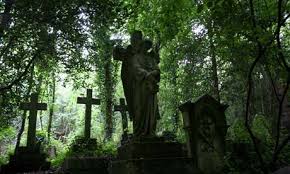
This goes much further than simple fear of death, however, and into the realm of borderline neurosis. Western society is so frightened of death that even any reminders of it must be shunted away. We mask our true ages with powders, creams, colorants and surgeries, we pack off our aged relatives to “retirement communities” instead of venerating them as founts of knowledge and experience, we spend phenomenal sums of money keeping people alive long past any chance of comfort or even consciousness, we have legal battles over whether a bundle of cells the size of a pinhead should be protected under the full auspice of the law and demonize those who disagree as murderers, all because of an unspoken assumption; that life is always, always preferable to death.
But what if that is incorrect?
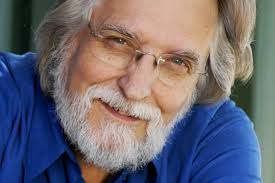
God, in a sense, does not even care about the outcome. Not the ultimate outcome. This is because the ultimate outcome is assured. And this is the second great illusion of man: that the outcome of life is in doubt.
It is this doubt about ultimate outcome that has created your greatest enemy, which is fear. For if you doubt outcome, then you must doubt Creator —you must doubt God. And if you doubt God, you must live in fear and guilt all your life.
-Neale Donald Walsch, Conversations With God, Book 1
Mr. Walsch’s ultimate outcome is a bit broader than my point here, but the idea is the same. Because we doubt the ultimate end point of our souls, we live in endless fear. So we run from death, hide from death, pretend that death is something as far away as possible, and in doing so, we fail to actually live. Yet how can I be sure that this is wrong? Perhaps this is really how God set this whole life thing up.
Well, personally I find that highly doubtful, mostly because that puts some ridiculous limits on the Divine.
Let me explain. Imagine being God. I know, big stretch, but bear with me. You are God, and you desire something. Does it come to pass? Of course! You are God, the Alpha and Omega, so that which you desire, is. Simple as that. There is no way that an Almighty Being could desire something and have it be unattainable. More than that, this implies something about existence that has massive consequences: the world is exactly as God desires it to be.
This is an idea that humanity has been grappling with for millennia. We look at the world and see that it has flaws: war, famine, inequality, disease, cruelty, senselessness. Yet if we are to believe in any sort of deity, we must reconcile the imperfections of the world with the idea that our Divine Creator must have a hand in those flaws being there. In earlier times, humanity explained this away by creating deities as flawed as any human, full of vices and foibles, conflicts and lusts. Later, as polytheism fell by the wayside and monotheistic ideas came to hold sway, we concentrated all of the negative godly aspects into an Adversary, whose corrupting influence was responsible for the world’s woes. When this wasn’t enough, we imagined that it was we, not God, who was responsible for the world’s imperfections. We, the thought goes, are the sinful ones, the fallen ones, the imperfect ones. The world is fine, it’s us dirty humans that muck it up, and there is a certain elegance to that point of view. Yet this still doesn’t satisfy the logical mind, for how could a perfect Divine create something imperfect? How could our Heavenly Father want us to be with Him, yet have that not come to pass? It is this line of thinking that has led many people to become atheists, turning away from all ideas of the Divine and putting all their faith into empiricism, laying all blame for the world directly at our feet.
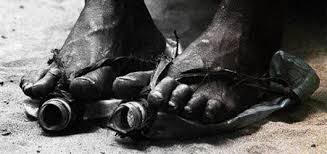
So where does this leave us? It may sound like I’m making a case for atheism, but I am not, mostly because the very proof that atheist point at is the same that I use to reinforce my faith in the Divine. The problem, I feel, is that too many faiths have not gone far enough in removing the human aspects from God. There are still too many leftovers from that polytheistic era, too many assumptions that our desires and preferences are the same ones that a deity would have. We assume that, since we want the world to be a certain way, God must want that too. But then we must ask the question; what does God want? Obviously, if we have an infinite Deity and universe that we are pretty sure had a beginning, then there must be a reason for Creation. What is it?
This is the real starting point, so please bear with me, this will get a little esoteric.
What could a infinite and all-powerful being desire? Desire implies a lack, that there is something that is wanted that is not manifest, so is there something an omnipotent God could not have? Oddly enough, the answer is yes, and that one thing is experience. In order to experience something, you have to be limited. You have to have a time that you do not have this experience so that you can go through the process of having it. Also, this implies a linear progression through Time, something else that a true unlimited God would not and could not have, because a linear existence would be a limitation. Finally, in order for there to be experience, there has to be separation into that-which-has-experience and that-which-is-experienced. For example, in order to be loving, there must be an object of that love. In order to be compassionate, there must be another for whom we can feel compassion. All experience require this separateness.
This then not only lays out the groundwork for a reason for God creating the Universe, but also creates a framework to explain why negative things exist. Let’s go back to the idea of compassion. Compassion is obviously a very positive emotion, yet for it to exist at all there must be some sort of negativity. Someone has to have gone through a tragedy, a hardship, a damaging experience of some kind in order for us to feel compassionate towards them. Yet this goes even deeper. Love obviously has no similar requirements, yet if we are to experience love we must have some concept of not-love to contrast it against. In order to truly understand love, the ideas of loneliness, heartache, loss, fear, and anger must exist as well, otherwise love has no meaning whatsoever. Therefore we must have total freedom to create whatever sorts of experiences we choose, because even the negative things we do to each other serve as a point of contrast for the positive. All things, as they say, work together for good. To everything there is a season, and a time and a purpose under Heaven.
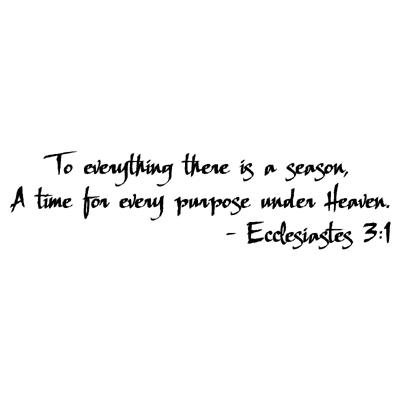
So what does all this have to do with fear of death? Well, there are two reasons we are afraid to die: 1) we think God will punish us for not being what He wants us to be, or 2) that we wink out of existence forever. So let’s look at the first. This is obviously based on human preference, that we value the things we call positive over those we label as negative. Yet if the Divine has set it up so that we can experience all of it, the good and the bad, why could there ever be any sort of punitive afterlife? Why would God punish us for doing precisely what he wants us to do, which is precisely whatever WE want to do? This only makes sense if we have a very limited Deity, one who suffers from very human limitations. Only a limited God could have preferences as to what we do nor do not do, yet only a truly Unlimited Divine makes any kind of sense.
This then brings me to the second point. Do we snuff out like candles when we die? Well, let’s look first at some scientific facts. First, we know scientifically that nothing in existence can be created or destroyed, only changed. Matter can turn into energy, energy condensed into matter, kinetic energy into potential, atoms split or fused, and so on. Second, we know from quantum mechanics that everything is interconnected and that at the subatomic level nothing truly exists in a specific location or state. Now, let’s combine those facts with my God-concept, an idea of a completely unlimited Divine. What is the result? If God is unlimited, then existence cannot be something separate from God because that would create a limitation, something God could not be. This correlates with the idea that the stuff of existence is indestructible and interconnected. So what does that mean?
We are God, experiencing Ourselves.
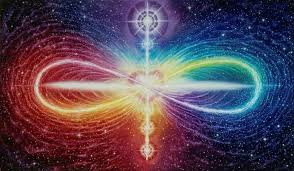
That, in my opinion, is the purpose of all of existence, to create a stage upon which the Divine can experience Itself. At the deepest and most fundamental level, all is a unified Oneness, dividing and reforming into infinite shapes and combinations throughout the Kosmos, all for the purpose of creating the one thing this Oneness could not do on its own: experience. And if this is true, what does that say about us? We do not and cannot wink out of existence when we die, because to do so is scientifically impossible and spiritually ridiculous. We are this Oneness in fractal microcosmic form, as immutable and eternal as Universe itself.
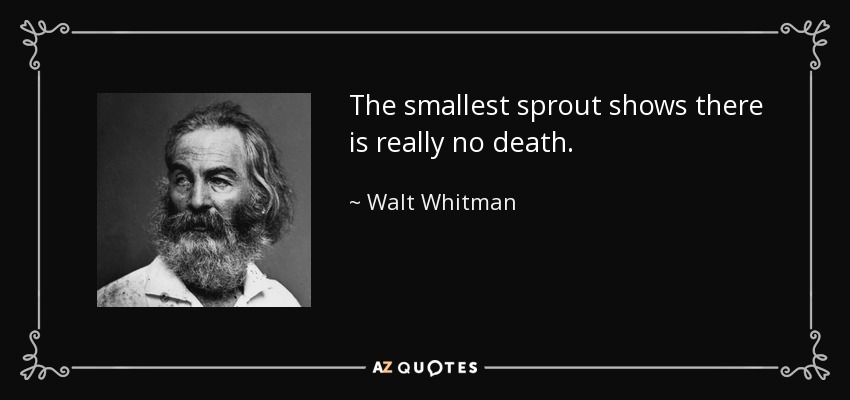
So, in closing, do not fear the Undiscovered Country. Our neurotic panic over our own mortality is nothing more than an illusion, brought about by limited perspective and a few thousand years of misinformed opinions about God. Our deaths will be nothing more than a transition to a different state, one where the perspectives of time and separateness drop away and we can see the whole of our existence laid plain, like a great patchwork weave of experiences and choices. Death, as Walt Whitman wrote, is far different than we have supposed, and luckier.








 James C. Struck: Author of The Curious Snowflake