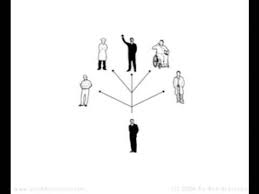
Free Will vs. Destiny

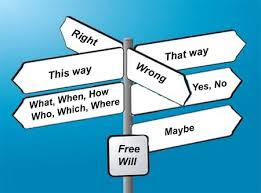
rightwrongsigns

The whole debate between free will and destiny is something I’ve spent a great deal of time mulling over, and I’ve found that one’s beliefs on the subject hinge on two interrelated concepts: the nature of the Divine (what I call Oneness) and the purpose of physical reality. If a person believes that destiny exists, they also tend to believe in a strongly personal Creator who has a definite plan for us and all existence. If a person believes in free will, they tend to conceptualize the Divine in far less personal terms (if at all) and see life-purpose as far more free-form.  Yet I personally break from this mold. I believe that Oneness can be very personal, yet I believe strongly in free will. So allow me to lay out my reasoning and show how I came to this conclusion.

If there is such a thing as destiny, it must be put in place by God, or the Divine, or the Higher Powers, or whatever limited little name you wish to give the Unlimited. If this is the case, then the Divine must have requirements, desires, or preferences of some sort, otherwise there would be no destiny. So my question then is this; what sort of preferences would the Divine have? One does not have preferences simply to have them. They must fill some need, whether it be psychological, emotional, or what have you. Yet we are talking about Oneness, That Which Is, the source of everything in existence, the Alpha and Omega. How could such a Being need anything?

A second and related issue I have with destiny has to do with Time. For something to need anything, there has to be Time involved, because there must be a moment when the thing desired is not possessed, another when it is either achieved or thwarted, and a process or transition from one to the other. Thus for the Divine to have any desires or needs, the Divine must be bound up by Time. Yet science has proven that Time is actually an aspect of physical reality, that there is not Time and Space, but what they refer to as the Time/Space continuum. For Oneness to be bound in time would then be a limitation upon the Unlimited, an obvious contradiction.

Thus in order for Destiny to exist, it must be possible for the Divine to have requirements and be limited by Time, yet there cannot be anything the Unlimited does not have, and the Creator must exist independent of Time, thus I cannot see how Destiny can exist.

Yet there must be a purpose to physical reality, otherwise it would not exist either. So where does that leave us? This quandary bound me up for a very long time, until a friend sent me a link to a very nifty video called “How To Imagine 10 Dimensions”. It is about 11 minutes long, but completely worth the watch.

The important point is this: when a conscious being makes a choice, a “fracture” occurs in 6th dimensional “space”, a splitting off like the branches of a tree, one path representing one choice, the other the opposite. What this means is that every choice, every possibility, exists multidimensionally. This was the final piece for me, because this meant that no requirements could possibly exist, since all possibilities already do! I cannot have a specific destiny when an infinitude of Jim Strucks exist in an infinitude of possible worlds doing an infinitude of different things, and the same holds true for everyone else.

This also solved my conundrum concerning the purpose of Reality. Put simply, the purpose is Experience. There is only one thing which a singular consciousness cannot do, no matter how transcendent, and that is to understand itself if there is no basis for comparison. For “I” to exist, there must be “not I”, for “here” there must be “there”, and so on. Thus Oneness created All That Is within/from Itself in order for there to be a way for it to experience Itself as Itself, and also as not-Itself.

We, as conscious beings, have a most important job. Since we perceive reality in a linear fashion, we can make choices and create those multi-dimensional fractures of probability I mentioned before. Basically, each time a conscious being makes a choice, it doubles the possible ways the One Soul can experience Itself by splitting Reality into two.

Thus, our entire purpose is to make choices, and which choice we make is completely irrelevant as far as the One Soul is concerned, since from Its point of view, all choices and results exist. But this does not mean that it is all meaningless, not at all! Our choices make all the difference in the world to us. It is through our choices that we forge our experience, our particular perspective. The more consistent we are with our choices, the stronger our particular experience becomes, the more we are able to tap into the creative power within us. Therefore, the closest thing we have to an official purpose in life is to decide and proclaim Who We Are. Thus, in many ways, we are on the same voyage of self-understanding and self-creation which Oneness, only in microcosm.

The Definition of Happiness

happiness is

I’ve been chewing on the idea of happiness for a long while now, and I’ve noticed something; it seems like it’s far easier to get a grasp on what happiness is not than what it is. We are told that happiness is Stuff or Self-Sacrifice or Falling In Love, that happiness is basically anything our society can turn into a product or an escape, yet all of those ideals are demonstrably lacking. I think that half the reason that people get involved in alternative religions is due to a dissatisfaction with society’s ideas about happiness.

But what actually is happiness, and how do we find it? That’s a lot tougher, mostly because happiness is a pretty individual thing; that which brings me happiness may bring you boredom, or vice versa. But I think I have a pretty solid idea, so I wanted to post it here and get some feedback on how my ideas resonate with all of you. Happiness, I believe, can be broken down into two broad categories:
1) Happiness through self-definition.
2) Happiness through connection to others.
 
These two define the inward and outward paths that souls take in their evolution, first one of movement inward to the creation of a individual self, then outward toward connection to others and, ultimately, Unity. I believe that just about everything that can truly make us happy can fit into these two broad categories or into both to some extent. Let’s look at a few examples and also at how each can be distorted by our misunderstandings about what happiness truly is.
 
Love: The ultimate in the second category, but can be twisted into possessiveness, which distorts connection through the desire to deny others the “special” connection you have, or self-sacrifice, which denies self-definition.
 
Success: A form of self-definition, namely the achieving of goals, which can be distorted into greed (lack of self-definition leading to the judging of worth based upon possessions) and power-hunger (connection overridden by a desire for control)
 
Spirituality: Can fit into both categories. Distorted versions run the gamut from self-righteousness (lack of self-definition compensated for by surety gained by being “right” or “chosen”) to herd mentality (massive overemphasis on connection at the expense of self-definition, thus the “church” is always right and never questioned) to escapism (ascetics and mystics divorcing themselves from society, thus throwing everything into self-definition and ignoring connection).
 
I think the key to true happiness is finding the balance point between self-definition and connection to others. Once again we see the seeming-contradiction in human nature, the “divine dichotomy” as Neale Donald Walsch calls it. We must define ourselves as individuals before we can become part of a group, we must have groups in order to define ourselves as individuals.
 
I would love to hear other’s take on this.
jumphappy

The Self-Destructive Artist

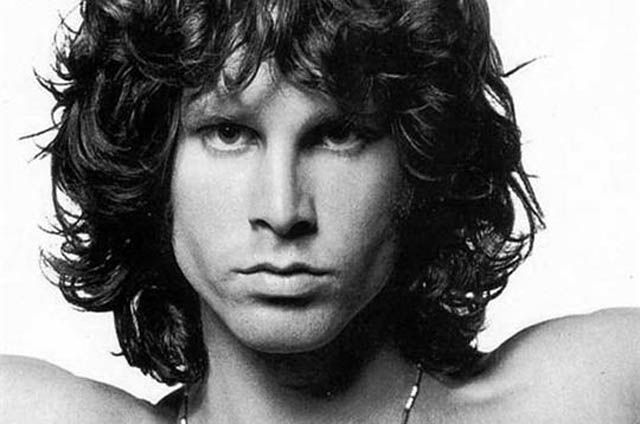
morrison
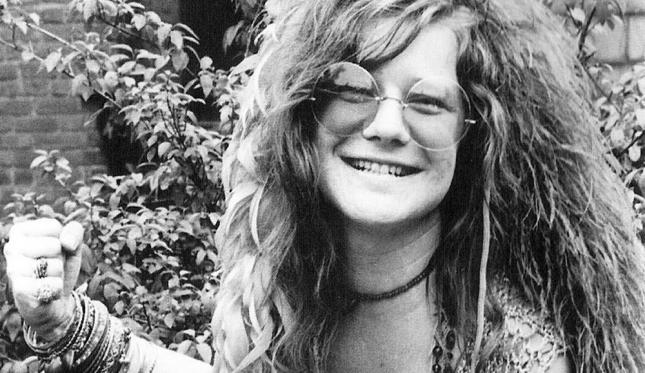
A few years before he died, I had a very interesting conversation with my late brother. He’d gotten me in our annual Christmas grab-bag and bought me a live recording of Pink Floyd’s “The Wall”, and we were sitting around afterwards jawing about music and musicians and how tragic it was that so many incredibly gifted individuals died so young: Jim Morrison, Janice Joplin, Jimi Hendrix, Keith Moon, and so on. I asked him why he thought it happened, that so many artistics tend to self-destruct, and he said he thought it was because creatives tend to have “a little more of God in them”, which makes them more sensitive to the evils of the world. I thought this was bunk, but the idea caught in a crack in my brain and has stayed there for years. Why is it that those we admire so greatly, who bring such joy to our lives, are often so miserable themselves?
I think the answer to this question lies in the nature and purpose of the arts. Any artistic endeavor, whether it be music or painting or dance or acting or whatever, is created or performed for the purpose of evoking emotion. In order to be art, I think it needs to make you feel something when you experience it. It doesn’t necessarily need to be a positive emotion: look at Stravinsky’s “The Right of Spring” or Munch’s “The Scream”, for example. But in any example, art brings forth emotion, and the more powerful that evoking, the better the art. That, I think, is why so many of the traditional art forms fractured after World War I. Many of the arts became more cerebral and less emotional, and people didn’t respond to it.

OLYMPUS DIGITAL CAMERA

So what does this have to do with musicians overdosing on heroine? In order for an artistic to create, they need to be able to grasp the emotion they intend to bring forth in their work. There has to be an intended response, a goal of joy or fear or sadness or rage or whatever that the wish their audience to experience, and so the creative needs to be able to feel the same emotion themselves to some extent. This is where things get dangerous, because too many creatives believe that they need to experience the emotion in order to truly represent it. They open themselves up to all sorts of emotional highs and lows, believing that doing so is necessary for their creativity to function. Thus the stereotypical artist: moody, angry, wild, and self-destructive.
Even if they survive this emotional rollercoaster, another trap lies ahead of them. While this society had done an adequate job of opening up avenues for creatives to learn the tools of their chosen trade (though how adequate is open to debate), what is completely neglected in this “education” is their emotional learning. This society places a great deal of stock in teaching young people intelligence, but almost nothing in teaching wisdom. Intelligence is understanding of other, while wisdom is understanding of self. This is bad enough for the average person, but for artistics such lack of self-learning is deadly. They have never learned how to deal with the very emotions they call forth from their creations, and as a result are far too often eaten alive by them.
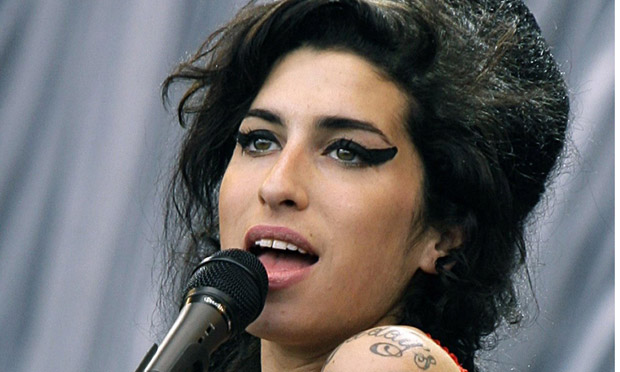
Amy Winehouse
Is it any wonder that so many creatives turn to substance abuse to numb themselves? Too often, they are already addicts of a sort, hooked on their own creativity and the emotional highs it brings them, and the step from addiction to creation to addiction to a bottle or a pill or a powder is very, very small. To top it all off, we have the Cult of Celebrity our society has produced, which both glorifies and crucifies those “lucky” enough to have “made it” in the world as creatives. They are showered with riches, inundated with fame, and told that this is all they should need to be happy, that this is the Point Of It All. Then when they are not happy, they assume that there is something wrong with them, and the spiral continues.
So what to do? How can this situation be stopped, for the health of those we admire so greatly and the good of our society as a whole? Perhaps the place to start is in the education of our young, teaching them wisdom as well as intelligence. Maybe the place is in our popular culture, promoting healthier ideas about entertainment. Or the place to start is to teach our creatives an psychically healthier way to tap into their emotions. Perhaps there is yet another place I don’t personally see yet, I don’t know. But something needs to be done.
For all of our sakes.
Janis-Joplin

“There Really is No Death”

quote-the-smallest-sprout-shows-there-is-really-no-death-walt-whitman-79-83-41

“The smallest sprout shows there is really no death, 

And if ever there was it led forward life, and does not wait at the end to arrest it, 
And ceas’d the moment life appear’d. 
All goes onward and outward, nothing collapses, 
And to die is different from what any one supposed, and luckier.”

 
Walt Whitman wrote that in “Song of Myself”, and in April of 2005 I read it to the congregation at my brother’s funeral. My brother was only 47 years old. He died suddenly while on a trip to California with friends from a rare virus that attacks the heart and enlarges it. He left behind a loving wife and two adolescent children. By any normal measure, this was a tragedy. But his funeral was a celebration, and one of the most amazing experiences of my life.  
 
My brother and I were exactly the same except in the ways we were complete opposites. Well over 6 feet, broad-chested and deep-voiced where I am a slender tenor, he was known as “Big Mike” by just about everyone, and just about everyone knew him. While I have always been drawn to alternative religions, he was very traditional. He spent 2 years in a Catholic seminary before going evangelical, and spent most of the last third of his life traveling throughout Illinois, Indiana, and Wisconsin, founding bible studies, youth ministries, and church music groups everywhere. Especially the music, which was a first love of both of us, and our strongest bond. Politically, we saw eye to eye in a strange way. I’m a good ol’ fashioned liberal, while he was a William Jennings Bryant-style Populist: social conservative, economic liberal. We had the usual we-are-family-so-we-won’t-talk-religion unspoken agreement, which is my only regret: I would have loved to really talk with him about it. 
 
Needless to say, his death was a shock, but if anything, his funeral was even more so. The whole family knew he had “devoted his life to God”, but had no idea what it really meant. The service was held in a big old Lutheran church he was a nominal member of, and it was good that it was held there, because it was literally standing room only: we later estimated there were about a thousand people there. Members of every church he visited, every group he founded, every life he touched showed up. After the initial service, the mike was opened up to everyone, and people talked for nearly 3 hours about my brother, how amazing he was, how he had touched and improved their lives. 
 
I thought long and hard about what I was going to say beforehand, and finally chose the 6th stanza of Walt Whitman’s poem “Song of Myself”, part of which I quoted above. It was strange to walk up in front of all those strangers who knew my brother, strange to stand in front of a church congregation for the first time since I dropped out of my church choir at 18. But in sharing those words, I felt myself heal. In reaching out to all those people with these sentiments, that death is not an end, but a change, the wound in my heart in the shape of my great mountain of a brother started closing, just as I helped all of those strangers to close theirs.  
 
So what does this all mean, and why do I share it here with you? Because despite all of our faiths and beliefs, we don’t actually know what happens when we die. We think we know, but it is all conjecture and intuition. But if there is one lesson I brought from the untimely death of my brother, it was this: that even if we do wink out like a candle when we die, what greater and truer immortality is there than to leave behind a great mass of people who remember you fondly? The kindly actions of my brother will echo down through the years, carried on by all the people whom he helped, inspired, and brought peace to. In this, he lived a thousand years. In this, he found heaven.  

My Favorite Bible Passage: Mark 11

bible-Sunlight

I am not a Christian, but I was raised Catholic and still find great wisdom and insight in the Bible, especially in what are referred to as the Synoptic Gospels, Matthew, Mark, and Luke. There are a great many wonderful stories and lessons in the Synoptics: the Beatitudes, Gethsemane, the parables, and so on, but my favorite moment in the Bible is chapter 11 of the Gospel of Mark. Not only do we get to see Jesus at the height of his ministry, but it shows his flaws and his humanness as well. Best of all, he speaks about the true potential of humanity in the clearest of terms.

Note: this same story appears in Matthew 21, but I prefer Mark’s version for reasons I will mention below.

Mark 11 opens with Palm Sunday, his triumphant entry into Jerusalem, and then continues to this. Quotes from the KJV, what can I say, I’m old school. 🙂

fig-tree

Mark 11
12 And on the morrow, when they were come from Bethany, he was hungry:
13 And seeing a fig tree afar off having leaves, he came, if haply he might find any thing thereon: and when he came to it, he found nothing but leaves; for the time of figs was not yet.
14 And Jesus answered and said unto it, No man eat fruit of thee hereafter for ever. And his disciples heard it.


After this, Jesus and his disciples re-enter Jerusalem and the famous moneychangers in the Temple scene occurs. Then this follows…

mountain

Mark 11
19 And when even was come, he went out of the city.
20 And in the morning, as they passed by, they saw the fig tree dried up from the roots.
21 And Peter calling to remembrance saith unto him, Master, behold, the fig tree which thou cursedst is withered away.
22 And Jesus answering saith unto them, Have faith in God.
23 For verily I say unto you, That whosoever shall say unto this mountain, Be thou removed, and be thou cast into the sea; and shall not doubt in his heart, but shall believe that those things which he saith shall come to pass; he shall have whatsoever he saith.
24 Therefore I say unto you, What things soever ye desire, when ye pray, believe that ye receive them, and ye shall have them.
25 And when ye stand praying, forgive, if ye have ought against any: that your Father also which is in heaven may forgive you your trespasses.
26 But if ye do not forgive, neither will your Father which is in heaven forgive your trespasses.


There are three very important lessons in these verses. First we get to see the essential humanness of Jesus. This incredible man, this wonderful and wise teacher, loses his temper at a tree and kills it with a word (in Matthew the tree withers instantly, rather than overnight as here). This shows us that he is not perfect; he is flawed, just like all of us. How many of us have wounded another with unkindness in a moment of frustration? How many of us have gotten snappy with others, even our loved ones, when we are hungry or tired? How incredibly normal and natural!  I find this moment of imperfection on the part of Jesus incredibly inspiring, because more than his temptation in the wilderness or his fear in Gethsemane or his doubt at Golgotha, this shows me a Jesus I can relate to as another man, searching for peace within and without, and occasionally failing.

The second lesson is how he turns a negative into a positive. Instead of dwelling on his mistake, he uses the awe his followers feel at the sight of the dead tree into an object lesson in the power that all have within them. Notice also, there are no caveats or limits to the power of prayer (some were added to this same story in Matthew), only that one needs to believe completely in the power of the Divine and the prayer will be answered. It doesn’t matter what is prayed for, it doesn’t matter the purity of the asker, all that matters is faith that goes beyond belief to perfect knowingness.

The third and most interesting lesson is the importance of forgiving others. This shift in the dialogue seems abrupt, almost a changing of subject, if one assumes the perfection of Jesus. But if we see him as flawed and human it makes perfect sense. He knows that he has done wrong by losing his temper and killing the tree, and in his heart he has asked the Divine for forgiveness for his trespass. Since this is on his mind, he then shares the insight that God will forgive us precisely as much as we forgive others. If we then remember that Jesus actually only three days away from his crucifixion at this moment, it makes this teaching especially poignant and relevant.

I love Mark 11. There is so much inspiration, so much power, so many incredible ideas packed into it. The potential of humanity, the importance of forgiveness, the power of faith, and tying it all together the wonderful example of this very human teacher using his own flaws to teach lessons to his followers, even as he stares his own death in the face. I may not be able to worship him as I did in my youth (the idea of it makes me laugh now) but can I draw inspiration from this wandering mystic? Absolutely.